_edited.png)
_edited.png)


Why Is My Child Not Floating? Parent Guide

A child can kick hard, put their face in the water, and still sink as soon as they are asked to float. If you are asking, “why is my child not floating?”, the answer is rarely that they are incapable of learning. More often, floating is being held back by a small but important combination of body position, breathing, tension, and confidence.
Floating is one of the first skills parents expect to see, but it can also be one of the most misunderstood. It is not simply a matter of lying still and hoping the water does the work. A successful float asks a child to trust the water, release tension, manage their breath, and maintain a position that may initially feel unfamiliar. Those are real skills, and they develop at different speeds.
Why Is My Child Not Floating Yet?
Every body is buoyant in water, but not every body will float in the same position or with the same ease. Children have different body proportions, lung capacity, comfort levels, and movement patterns. Some may float calmly on their back early on. Others need more time, support, and repetition before they can relax enough for the water to support them.
The goal is not a perfectly still, picture-ready float. The goal is for your child to learn how to find and hold a safe, controlled position in the water. That may begin with their instructor supporting the head or back, then progress to a short independent back float, a front float with bubbles, or a recovery from floating to standing.
They are holding tension in their body
Tension is the most common reason a child struggles to float. When children feel uncertain, they often lift their head, bend at the hips, pull their knees toward their chest, or keep their arms and legs rigid. These movements shift the body downward and make floating feel much harder.
This can be confusing for parents because the child may look like they are trying very hard. In water, however, effort is not always the answer. A child usually floats better when their shoulders soften, their belly stays near the surface, and their body lengthens. Learning to relax while being supported by water takes patience, especially for children who are still building water confidence.
Their head position is changing their whole body line
The head has a big influence on buoyancy and balance. On a back float, a child who lifts their chin to look toward their feet will often cause their hips and legs to drop. On a front float, a child who tries to keep their face out of the water may fold at the waist and lose the long body line needed for support.
A simple cue from a qualified instructor can make a meaningful difference. On the back, children may be encouraged to look straight up, relax their ears in the water, and keep their tummy up. On the front, they can practise putting their face in, blowing steady bubbles, and reaching long through the water. The right cue depends on the child, which is why personalized coaching is so valuable.
Breathing is getting in the way
Children often hold their breath tightly when they are nervous. This may provide a brief lift because full lungs increase buoyancy, but it can also make their whole body stiff. Other children exhale all at once, lift their head quickly for air, and lose their position before they have time to settle.
Comfortable floating relies on controlled breathing, not breath-holding contests. In lessons, children can build this skill gradually by practising hums, bubbles, and short face-in floats before being asked to maintain a longer position. When breathing becomes predictable, the water feels more manageable.
They are still learning to trust the water and the instructor
For some children, the challenge is emotional rather than physical. A back float can feel especially vulnerable because they cannot see where they are going and may worry about water near their ears or face. A child who clings to an instructor, turns immediately to grab the wall, or refuses to put their head back is communicating that they need more trust-building before they need more distance.
That trust should be earned, not rushed. Consistent lessons, clear routines, and an instructor who adjusts the challenge in small steps can help a child feel secure. A calm child is more available to learn, and confidence built through supported success tends to transfer to independent floating.
What Good Floating Progress Looks Like
Progress is not always linear. One week, your child may hold a three-second back float with help. The next week, they may seem less willing because they are tired, distracted, or adjusting to a new cue. Looking at the bigger pattern is more useful than judging one lesson.
Early progress may look like accepting water around the ears, allowing the instructor to support less of the body, keeping the chin neutral, or recovering to standing without panic. These are meaningful steps toward water safety. A child does not need to float independently right away to be making excellent progress.
A structured swim program should identify which part of the skill needs attention rather than repeatedly asking a child to “just float.” Is the issue body alignment? Is it fear of going on their back? Is the child unable to exhale comfortably with their face in? Specific feedback gives parents a clearer picture of what is improving and what comes next.
How to Help Without Creating Pressure
The most helpful thing parents can do is keep language calm and specific. Instead of saying, “You know how to float,” try, “Let’s practise relaxing your shoulders,” or, “Your instructor is helping you keep your tummy up.” Praise the process, including attempts that do not end in a full float.
Avoid forcing a child into a float, unexpectedly submerging them, or stepping away to see whether they can manage alone. Those approaches can increase fear and make the skill take longer. Water safety is built through supervised, purposeful practice, not surprise tests.
Outside of formal lessons, keep practice simple and close to the wall or with hands-on adult support. Short, positive repetitions are better than long sessions that end in frustration. If your child enjoys games, try pretending to be a starfish on their back while you support their head and upper back, or a sleepy sea turtle on their front while they blow bubbles. Stop before they are overwhelmed.
It also helps to avoid comparing siblings, classmates, or other children at the pool. A child who learns to float later is not necessarily behind. They may simply need more time to organize the skill or feel comfortable enough to relax.
When Personalized Instruction Makes a Difference
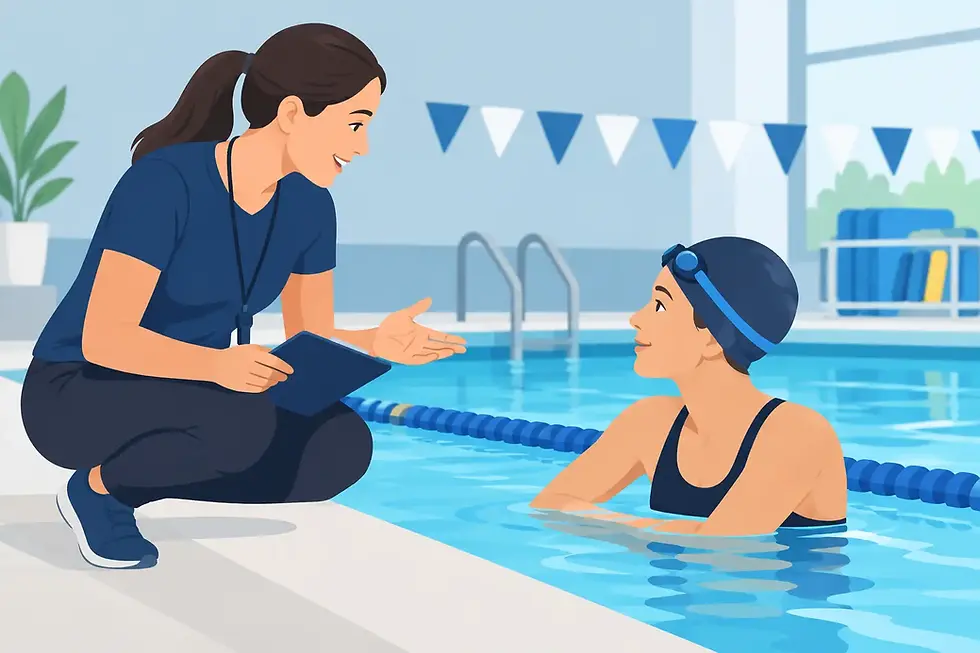
Group classes can be a positive introduction to swimming, but children who are stuck on floating often benefit from more individual attention. The instructor needs time to observe subtle patterns: whether a child bends their knees when nervous, lifts the head during a breath, resists support near the ears, or becomes tense after a certain amount of time in the water.
In private or semi-private lessons, practice can be adapted in the moment. An instructor might use more support at first, shorten the float, change the cue, or combine the skill with a recovery to the wall. These adjustments help the child experience success without skipping the foundations that make floating safer and more reliable.
At Aqua Elite, low student-to-teacher ratios and weekly skill feedback give families a clearer view of these small but valuable gains. For families in Vaughan, North York, Whitby, or Oshawa, that level of tracking can replace guesswork with a purposeful plan for the next lesson.
When to Ask for Extra Guidance
Most floating challenges are a normal part of learning. Still, speak with your child’s instructor if they show ongoing distress around water, consistently panic when supported on their back, have difficulty following safety directions, or make no progress despite regular, positive practice. A qualified instructor can adjust the lesson approach and help determine whether the child needs a slower progression, more frequent lessons, or a different teaching style.
If your child has a medical condition, developmental consideration, ear-related concern, or a history of a frightening water experience, share that information before lessons begin. It does not mean swimming is off limits. It helps the instructor create a safer, more appropriate plan.
Floating is not a pass-or-fail moment. It is a confidence skill built one relaxed breath, one supported position, and one successful recovery at a time. When your child feels safe enough to let the water help, progress often follows.


Comments