_edited.png)
_edited.png)


15 Best Questions for Your Swim Instructor

A swim lesson can look busy from the pool deck while still missing what your child or teen needs most: clear coaching, safe progression, and enough individual attention to build real confidence. The best questions for swim instructor conversations help you look beyond a friendly introduction and understand how lessons will support meaningful skill development.
Whether you are enrolling a first-time swimmer, helping a nervous child return to the water, or looking for more focused coaching for an experienced swimmer, the answers should make you feel informed. A strong instructor welcomes thoughtful questions because they show you are invested in a safe, purposeful learning experience.
Best Questions for a Swim Instructor Before You Enrol
1. What certifications do you hold?
Start with credentials. Ask whether the instructor holds recognized swim instructor qualifications and current first aid and CPR certifications. Certifications are not the only measure of a great teacher, but they confirm a foundation in water safety, emergency response, and age-appropriate instruction.
You can also ask how often their training is renewed. Swimming instruction evolves, and instructors who continue developing their skills are better prepared to adapt lessons for different learners.
2. How do you keep swimmers safe during lessons?
Listen for an answer that goes beyond watching the pool. A thoughtful instructor should explain how they position themselves, supervise swimmers at varying ability levels, introduce new skills safely, and respond when a student becomes tired, overwhelmed, or uncomfortable.
Safety also includes pacing. A child should be challenged without being pushed into a skill before they have the body position, breath control, or confidence to attempt it safely.
3. How do you work with nervous or water-shy swimmers?
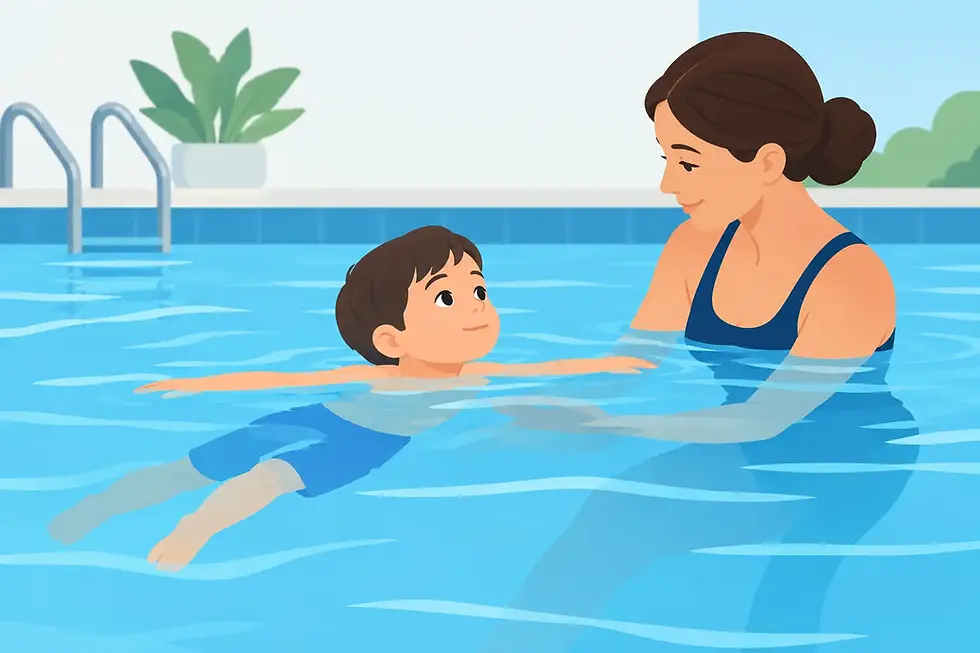
This question is especially valuable for parents of beginners. The best approach is rarely forcing a child to put their face in the water or move ahead before they are ready. Ask how the instructor builds trust, whether they use gradual exposure, and how they celebrate small wins.
A confident answer will include patience and a plan. Progress may begin with entering the water comfortably, blowing bubbles, floating with support, or travelling a short distance. Those early milestones matter because they create the confidence needed for stronger skills later.
4. How do you assess a swimmer's starting level?
Age alone does not determine ability. Two children in the same grade may have completely different comfort levels, coordination, and experience in the water. Ask how the instructor identifies the right starting point before setting goals.
A quality assessment considers more than whether a swimmer can cross the pool. It should look at body position, breathing, floating, kicking, stroke mechanics, deep-water comfort, and safe decision-making around water.
Questions About Lesson Structure and Progress
5. What skills will my swimmer work on first?
You should be able to understand the first stage of the learning plan in plain language. For a beginner, that may include safe entries and exits, submersion, buoyancy, and independent movement. For a more experienced swimmer, the focus could shift to efficient breathing, stroke development, endurance, or deep-water skills.
The exact sequence depends on the swimmer, but the instructor should be able to explain why those skills come first.
6. How do you set goals and measure progress?
Parents should not have to guess whether lessons are working. Ask how skills are tracked, how goals are updated, and when you can expect feedback. Regular progress updates make it easier to see what has improved, what needs more practice, and what comes next.
Measurable progress does not mean every swimmer advances at the same speed. It means each swimmer has clear, appropriate goals. A child who gains the confidence to float independently has made genuine progress, even if another child is already learning front crawl.
7. What is the student-to-instructor ratio?
This question can change the entire lesson experience. In a larger group, swimmers may spend more time waiting, receive fewer corrections, and have less opportunity to repeat new skills. Smaller ratios often allow for more individualized feedback and a lesson pace that matches the swimmer.
Private, semi-private, and small-group lessons each have advantages. A private lesson offers the most focused attention. Semi-private lessons can work very well for siblings or friends with similar abilities. Small groups can add motivation and social energy, provided the instructor still has enough time to coach each student.
8. How much practice time does each swimmer receive?
A swimmer learns by moving, repeating, receiving feedback, and trying again. Ask how the instructor keeps students active during the lesson rather than waiting at the wall for long stretches.
There are times when observation is useful, especially when learning a new drill. Still, a well-run lesson should give swimmers frequent opportunities to practise with a clear purpose.
9. How will I receive feedback?
Ask whether feedback is given after every lesson, at regular checkpoints, or only when requested. The most helpful updates are specific: what the swimmer practised, what went well, what needs attention, and how the family can support progress between lessons.
At Aqua Elite, weekly feedback and online skill tracking can make progress easier for families to follow. This is particularly helpful when more than one parent or caregiver is involved in scheduling and supporting lessons.
Questions That Reveal Teaching Quality
10. How do you explain and correct a new skill?
Great instructors do more than demonstrate a stroke and ask swimmers to copy it. They break skills into manageable steps, use language the swimmer can understand, and give one or two useful corrections at a time.
Ask for an example. If a swimmer struggles with front crawl breathing, what would the instructor look for first? A clear response may mention body rotation, relaxed exhalation underwater, timing, or head position. That shows the instructor can diagnose the cause, not just point out the result.
11. How do you balance encouragement with correction?
Swimmers need encouragement, especially when they are trying a difficult skill. They also need honest coaching. The right balance helps students feel proud of effort while understanding exactly how to improve.
Be cautious of programs that promise fast advancement without discussing skill quality. Moving through levels is motivating, but safe, reliable swimming ability matters more than rushing to the next badge or benchmark.
12. Will my swimmer have a consistent instructor?
Consistency can be valuable, particularly for young or anxious swimmers. A familiar instructor understands the swimmer's strengths, challenges, and learning style, which reduces the time needed to rebuild trust each week.
That said, occasional substitutions are sometimes unavoidable. Ask how lesson notes and progress information are shared so a substitute instructor can continue the plan without starting over.
13. What happens if we miss a lesson or need a schedule change?
Convenience matters for busy GTA families, but flexibility should still be clear. Ask about make-up options, cancellation notice, scheduling policies, and whether the same lesson time can be maintained from week to week.
The best policy for your family depends on your routine. A highly flexible schedule may be essential for shift workers, while another family may value a guaranteed weekly time with the same instructor.
Questions to Ask Before You Commit
14. What would success look like in the first few months?
This question turns broad promises into realistic expectations. For a beginner, success might be entering the water willingly, floating independently, and moving short distances with better control. For an experienced swimmer, it could mean cleaner strokes, more efficient breathing, or greater endurance.
A good instructor will avoid guaranteeing a fixed outcome by a fixed date. Progress depends on attendance, practice, confidence, physical development, and the swimmer's starting point. But they should be able to describe a sensible path forward.
15. Is this lesson format the right fit for my swimmer?
Ask the instructor directly whether they recommend private, semi-private, or small-group instruction for your swimmer's needs. Share anything that may affect learning, such as fear of water, attention challenges, previous negative experiences, competitive goals, or a sibling who wants to learn alongside them.
The right answer may not be the most expensive option. A swimmer who thrives around peers may do well in a small group, while a child working through significant anxiety may benefit from more individual attention at the beginning. The best fit is the format that gives your swimmer enough support, practice, and confidence to keep progressing.
The right swim instructor will leave you with more than a schedule and a starting level. You should feel confident that your swimmer is known, supported, and being taught with a clear purpose. Ask the questions, listen for specific answers, and choose the program that makes steady progress feel possible for your family.


Comments