_edited.png)
_edited.png)


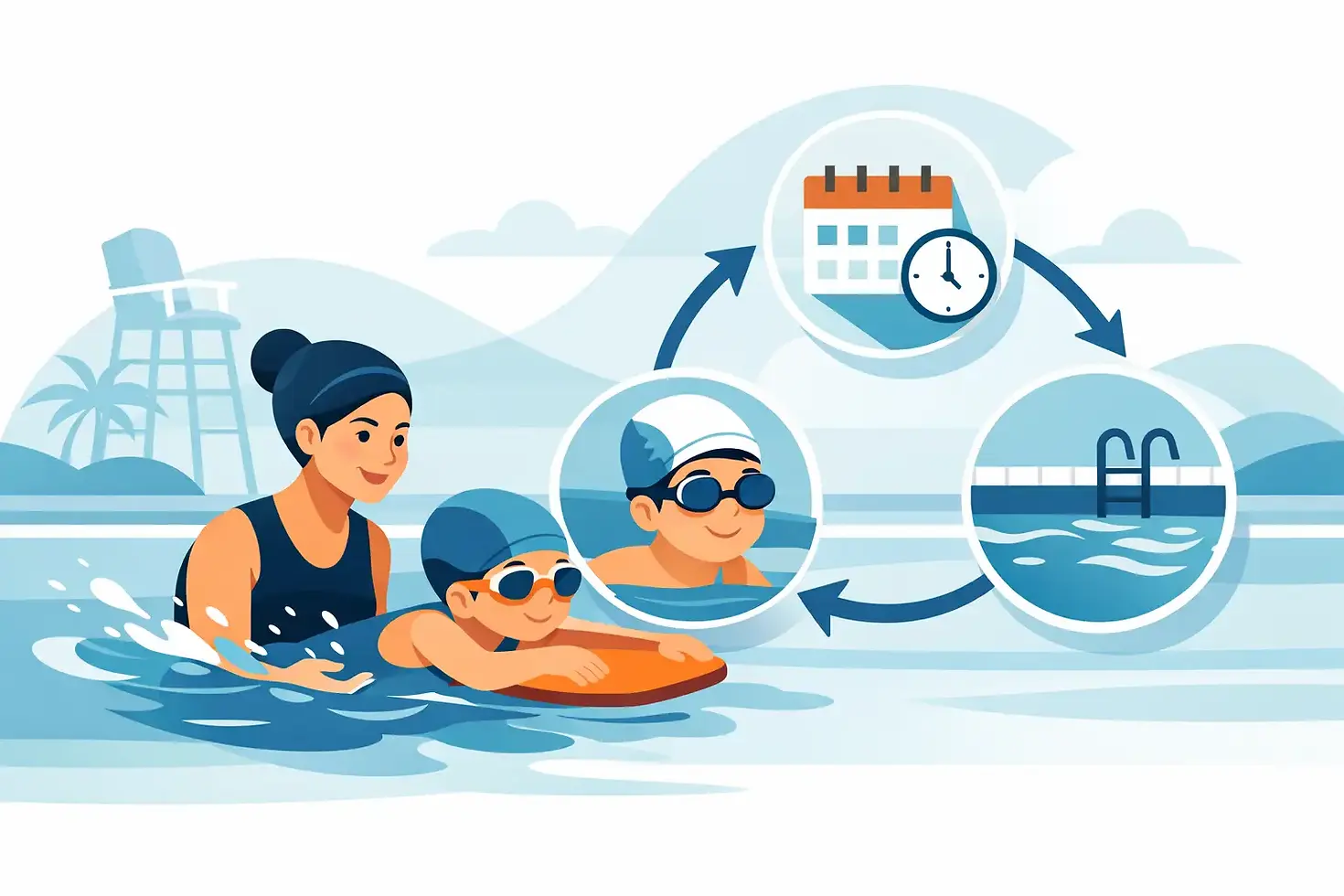
A Guide to Swim Lesson Consistency

Miss a week here, switch schedules there, add a long break in the middle of the session, and swim progress usually slows down fast. A good guide to swim lesson consistency starts with one simple truth: swimmers improve best when lessons happen often enough, with clear goals and a routine that stays steady.
That matters whether your child is learning to float, your teen is refining strokes, or you are an adult working through water anxiety. In all three cases, consistency helps skills stick. It builds comfort, reduces stop-and-start frustration, and gives instructors enough momentum to teach with purpose instead of spending each lesson rebuilding what was already covered.
Why consistency matters more than people expect
Swimming is not just about fitness or technique. It is a safety skill, a confidence skill, and for many families, a long-term developmental skill. That changes how lessons should be approached. Unlike one-off activities where irregular attendance may not affect outcomes much, swim lessons depend heavily on repetition.
When swimmers return to the water regularly, they remember how movements feel. Kicking, breath control, floating, body position, and stroke timing all improve through repeated exposure. If too much time passes between lessons, that physical memory fades. The next class becomes partly a review session, which can slow overall progress.
There is also an emotional side to consistency. Children who attend regularly tend to feel more secure because the environment becomes familiar. They know what to expect, they recognize their instructor, and they build trust in the learning process. Adults benefit in a similar way. Regular lessons reduce the mental barrier that can build up when too much time passes between sessions.
A practical guide to swim lesson consistency at home and in class
Consistency does not mean forcing perfect attendance in every season of life. Families are busy. Illness, travel, school demands, and changing work schedules are real. The goal is not perfection. The goal is to create enough structure that swimming stays part of the routine instead of becoming something that gets restarted over and over again.
The most effective lesson plans usually have a predictable rhythm. Weekly instruction is often the sweet spot because it gives swimmers frequent practice without creating burnout. For some learners, especially beginners or swimmers with very specific goals, more frequent lessons can accelerate progress. For others, once a week paired with intentional practice is ideal.
What matters most is choosing a schedule you can maintain. A plan that looks great on paper but falls apart after three weeks is less helpful than a realistic schedule your family can keep for months.
Keep the same day and time when possible
Routine reduces friction. If lessons move from Tuesday evening one week to Saturday afternoon the next, it becomes harder for families to protect the time. A fixed schedule helps parents plan around lessons instead of constantly renegotiating them.
This is especially useful for younger swimmers. Children tend to settle faster when swim lessons feel like a normal part of the week, much like school, sports, or music lessons. The fewer surprises around timing, the easier it is to arrive prepared and ready to learn.
Treat swim lessons like skill-building, not occasional recreation
A common reason consistency breaks down is that swimming gets framed as optional fun instead of a progressive program. Enjoyment matters, of course, but lesson time has a specific purpose. Each class builds on the last one.
When families view lessons as part of a learning path, attendance decisions become clearer. Missing class is no longer just skipping an activity. It means interrupting a progression that supports safety, confidence, and technique.
Choose a program with measurable progression
Consistency is easier to maintain when progress is visible. If parents cannot tell what their child is working on, or if adult swimmers are unsure whether they are improving, motivation starts to fade.
This is where structured instruction makes a real difference. A program with clear skill benchmarks, instructor feedback, and ongoing progress tracking gives swimmers and families something concrete to follow. You are not just showing up. You are moving through a sequence with purpose.
For many families, that sense of direction is what turns swimming from a short-term trial into a lasting routine.
The biggest threats to swim lesson consistency
Most inconsistency does not come from lack of interest. It comes from avoidable obstacles that pile up over time.
One of the biggest is overscheduling. If swim lessons are added to a calendar that is already stretched thin, they are more likely to be the first thing dropped. It is better to choose a manageable format from the start, whether that means one lesson a week, a nearby location, or a smaller group setting that feels worth the commitment.
Another issue is unclear expectations. If a family expects dramatic results after only a few sessions, they may lose patience too early. Swimming is progressive. Some breakthroughs happen quickly, especially with confidence and comfort. Others, like stroke refinement and endurance, take time. The right expectation is steady growth, not instant mastery.
Then there is the challenge of gaps between lessons and practice. If swimmers only think about the pool during class time, skills can feel disconnected from the rest of the week. Even a few minutes of discussion at home can help reinforce what they are learning.
How parents can support consistency without adding pressure
The best support is calm, practical, and predictable. Children pick up quickly on the tone adults bring to lessons. If swim day feels rushed or stressful, that can affect how they enter the water.
Start with preparation. Pack the bag early, keep goggles and towels in a consistent place, and leave enough time to arrive without a scramble. Small habits make a big difference because they remove unnecessary friction.
It also helps to talk about lessons in specific terms. Instead of asking, "Did you have fun?" every time, try asking what skill they practised, what felt easier this week, or what they want to improve next time. That kind of conversation reinforces that lessons are building toward something.
Praise effort, not just outcomes. A child who puts their face in the water more willingly, listens carefully, or retries a skill after struggling is making progress. Confidence grows when swimmers feel recognized for the work behind the result.
When consistency needs flexibility
There is a difference between healthy flexibility and constant disruption. Good programs understand that families need options, but structure still matters.
If your schedule changes seasonally, plan ahead rather than waiting until attendance becomes irregular. If your child is tired after a full school day, a weekend slot may create better consistency than an evening lesson. If a swimmer thrives with more individual attention, a private or semi-private format may produce stronger engagement and fewer stalled sessions.
This is where personalized instruction can help. A swimmer who receives focused coaching often progresses more efficiently because the lesson is tailored to their pace, strengths, and sticking points. That can make consistency feel more rewarding. Aqua Elite builds around that kind of purposeful structure, which is one reason many families prefer smaller ratios and clear feedback over larger generic programs.
A guide to swim lesson consistency for adult swimmers
Adults sometimes assume consistency matters less for them because they are more self-directed. In practice, it matters just as much. Adults are often balancing work, family, and personal goals, so missed lessons can quickly turn into long pauses.
If you are learning as an adult, protect your lesson time early in the week if possible. Later bookings are easier to sacrifice when life gets busy. It also helps to set a narrow goal for the current phase of training, such as becoming comfortable in deep water, improving breathing rhythm, or learning front crawl with better body position.
Specific goals make it easier to stay committed because progress is easier to recognize. And if fear or hesitation is part of your learning experience, regular attendance is one of the best ways to reduce it. Confidence in the water grows through repeated successful exposure, not occasional bursts of motivation.
What consistent progress actually looks like
Progress is not always dramatic from one lesson to the next. Often it looks quieter than parents expect. A swimmer needs fewer reminders. Their kick holds longer. They recover more quickly after a mistake. They enter the pool with less hesitation. These are meaningful signs that the lesson rhythm is working.
Over time, those smaller gains create stronger outcomes. Skills become more automatic. Endurance improves. Technique gets cleaner. Most importantly, swimmers feel more capable and more secure in the water.
If you want swim lessons to lead somewhere real, consistency is not a bonus. It is the framework that holds the whole learning process together. Choose a schedule you can sustain, look for instruction with clear progression, and give the process enough time to work. Strong swimmers are not built by occasional effort. They are built by steady, supported repetition.


Comments