_edited.png)
_edited.png)



Is Lifeguard Training in North York Right for You?
- Aqua Elite Durham
- 11 minutes ago
- 5 min read

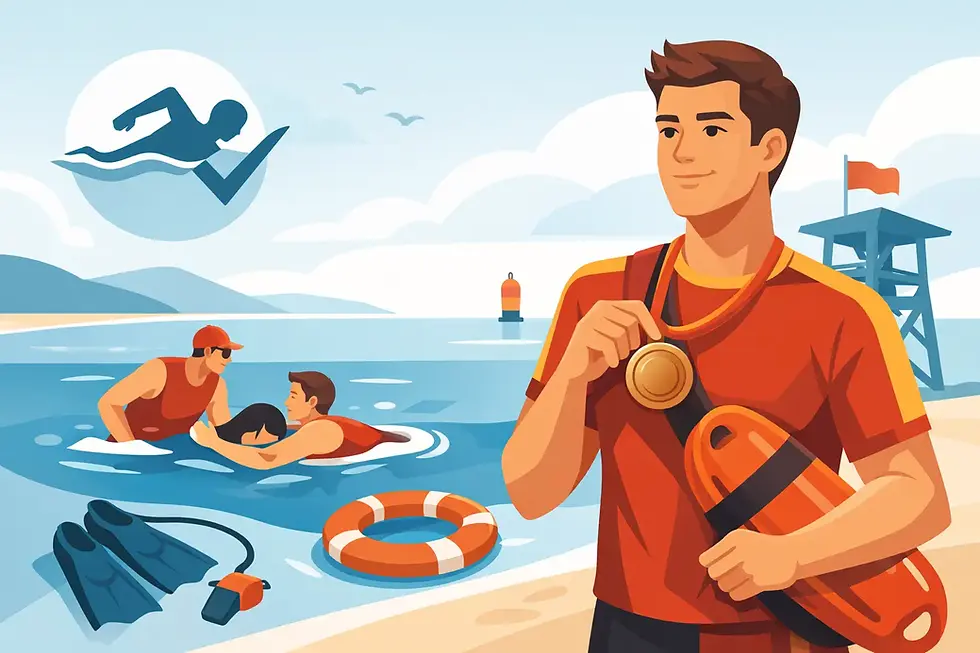
A lifeguard’s most important skill is not a perfect whistle blast or a fast lane swim. It is the ability to notice a problem early, stay calm when others are worried, and act with purpose. That is why lifeguard training North York is a serious next step for strong swimmers who want to turn their water skills into real safety leadership.
For teens, adults, and parents planning a meaningful progression in aquatics, lifeguarding can be a rewarding goal. It also asks more than many people expect. Candidates need physical endurance, sound judgement, first aid knowledge, and the confidence to communicate clearly with children, families, and other pool users.
Lifeguard Training North York: What the Path Requires
In Ontario, the usual route toward working as a pool lifeguard follows the Lifesaving Society progression. Most candidates begin with Bronze Medallion, move to Bronze Cross, complete Standard First Aid with CPR-C, and then take the National Lifeguard course. Each stage builds on the last, shifting the focus from personal survival and rescues to team-based supervision and emergency response.
Bronze Medallion introduces lifesaving principles, rescue skills, fitness, and judgement. Candidates learn that a rescue is not just about getting to someone quickly. It starts with assessing the risk, choosing the safest approach, and preventing a second victim.
Bronze Cross raises the standard. It develops stronger rescue skills, introduces more complex scenarios, and prepares candidates to assist in lifeguard situations. For many swimmers, this is where the work begins to feel less like a swimming class and more like professional preparation.
National Lifeguard is the certification commonly required for lifeguarding at pools. The course includes surveillance, recognition of distressed swimmers, communication, emergency procedures, spinal injury management, teamwork, and fitness. Candidates must generally be at least 15 years old by the end of the course, hold Bronze Cross, and have Standard First Aid with CPR-C. Requirements can be updated, so it is always wise to confirm the prerequisites for the specific course before registering.
Strong Swimming Is the Starting Point, Not the Finish Line
A swimmer can be fast, comfortable in deep water, and still find lifeguard training demanding. The reason is simple: lifeguarding requires you to perform skills under pressure while making safe decisions for someone else.
Candidates are expected to swim with efficient technique, tread water with control, surface dive, carry or support another person, and maintain stamina through repeated drills. Instructors also look for awareness. Can you scan an area consistently? Can you spot a swimmer whose behaviour has changed? Can you give clear direction without escalating a situation?
This is where focused swimming instruction can make a difference. A swimmer who has spent time improving endurance, deep-water comfort, treading, and stroke efficiency enters the lifesaving pathway with more attention available for decision-making. Instead of using all their energy to complete a swim requirement, they can concentrate on the rescue scenario and the judgement behind it.
For younger teens, the best preparation is often not rushing into a certification course. It may be a season spent building stronger strokes, better stamina, and confidence in challenging water. Progress is more valuable when it is steady and measurable.
What Training Actually Feels Like
Lifeguard courses are active. Expect classroom discussion, pool drills, physical assessments, role-playing, and practical scenarios where candidates rotate through different responsibilities. You may be asked to respond to an uncooperative patron, identify hazards around a pool deck, perform a rescue, provide first aid, or communicate with a team during an emergency.
Some candidates are surprised by how much of the course happens outside a rescue. Prevention is central to the role. A skilled lifeguard positions themselves well, scans continuously, enforces rules respectfully, and recognizes when a small concern could become a bigger problem.
The course can also feel mentally demanding. Scenarios often involve noise, distractions, time pressure, and several tasks at once. That challenge is intentional. In a real facility, a lifeguard must remain alert even when the pool appears quiet, and must respond professionally when circumstances change.
How to Know Whether You Are Ready
Readiness is not about being fearless. It is about being willing to practise, accept feedback, and keep improving when a skill is difficult. A good candidate is dependable, coachable, and comfortable taking responsibility.
Before enrolling, consider whether you can swim continuously with good form, tread water without panic, and work in deep water with confidence. You should also be prepared to participate fully in physical rescues and first aid practice. Lifeguarding is hands-on, and courses require candidates to work closely with peers in realistic training situations.
Time commitment matters too. A compressed course may suit an experienced, well-prepared swimmer who can focus for several long days. A more gradual schedule can be better for a student balancing school, sports, or work. Neither option is automatically better. The right choice depends on your current skills, availability, and ability to retain what you learn between sessions.
Parents can help by looking beyond the certificate. Ask whether your child is ready for the responsibility that comes with the role. Lifeguarding supports maturity, leadership, and employment skills, but it should not feel like a box to check before they have the water confidence to succeed.
Preparation That Makes a Real Difference
The weeks before a course are a useful time to build consistency. Practise swimming several times per week if possible, with attention to efficient front crawl and breaststroke, controlled treading, and comfortable underwater movement. Endurance matters, but so does conserving energy through sound technique.
Review basic first aid concepts if you already have exposure to them, but do not rely on memorization alone. Lifeguard training asks you to apply information in context. Practise speaking clearly, following a sequence of steps, and staying organized when a scenario changes.
It also helps to arrive with the right mindset. Ask questions when you do not understand a skill. Treat feedback as part of the process. A candidate who corrects a mistake quickly is often making stronger progress than someone who tries to appear confident without fully understanding the procedure.
At Aqua Elite, the same principle guides swim development: purposeful instruction, individual feedback, and skills that build from one level to the next. For future lifeguards, that foundation can make the transition from swimmer to safety leader feel more achievable.
Beyond Certification: Becoming a Reliable Guard
Earning National Lifeguard certification is a major accomplishment, but it is the beginning of professional growth rather than the end. New guards continue learning through facility orientations, in-service training, mentorship, and real-world experience. Every pool operates differently, with its own procedures, team expectations, and community needs.
The strongest lifeguards remain attentive after the excitement of certification has passed. They show up on time, maintain their fitness, refresh their first aid knowledge, and respect the fact that families trust them with safety. Those habits matter just as much as passing a timed swim or completing a scenario.
If lifeguarding is your goal, give yourself permission to prepare properly. Build the water skills first, choose a course that fits your readiness, and approach every lesson with care. The confidence you develop will serve you well at the pool and far beyond it.


Comments