_edited.png)
_edited.png)


Kids Swimming Classes Oshawa Parents Can Trust
- Aqua Elite Durham
- 7 days ago
- 5 min read

A child who can put their face in the water one week and float independently the next is not just having fun - they are building a safety skill that lasts. The right kids swimming classes Oshawa families choose should make those milestones visible, supported and appropriate for each child’s starting point.
Swimming progress is rarely a straight line. Some children are ready to kick and glide after their first few lessons, while others need more time to feel comfortable leaving the wall or putting their ears underwater. What matters is not rushing through a generic level. It is teaching the next skill at the right time, with patient coaching and a clear plan.
What Strong Kids Swimming Classes in Oshawa Should Offer
A good lesson begins with a safe, welcoming environment, but it should go further than water play. Children need instruction that develops confidence alongside practical skills: safe entries and exits, breath control, floating, movement through the water and, as they advance, coordinated strokes and endurance.
The difference often comes down to attention. In a large class, an instructor must divide their focus among many swimmers with different abilities and comfort levels. A child who is nervous may wait too long for individual help, while a child who is ready for more challenge may spend too much time repeating skills they have already learned.
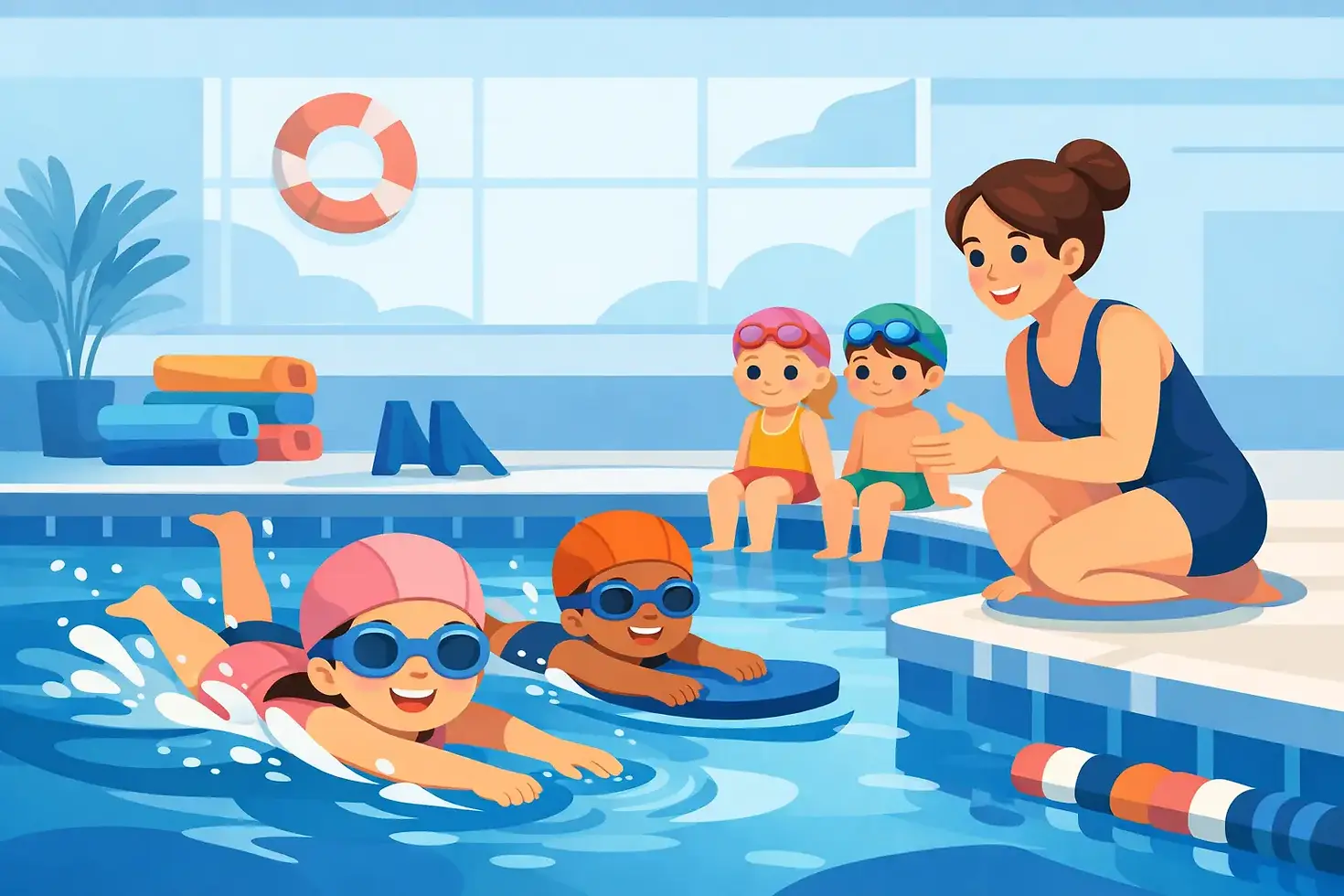
Private, semi-private and small-group formats give instructors more opportunity to adjust each lesson. A nervous beginner can practise a supported back float without pressure. A confident child can work on breathing rhythm, streamline position or stronger kicking instead of waiting for the class to catch up. Neither approach is better for every family. The right fit depends on your child’s personality, previous experience and goals.
A Clear Progression Matters More Than a Level Name
Level names can be useful, but they do not tell the whole story. Two children listed in the same level may have very different needs. One may be comfortable floating but still hesitant to submerge, while another may submerge easily but need support with independent movement.
Look for a program that teaches skills in a purposeful sequence and assesses what a swimmer can actually do. Early lessons should establish comfort, body position and basic water safety. From there, children can build propulsion, breathing control, stroke foundations and endurance. Each skill supports the next one.
This approach gives parents a clearer answer than “they did well today.” You should be able to understand what your child practised, what they can now do independently and what they are working toward next.
Choosing the Right Lesson Format for Your Child
There is no single lesson format that suits every swimmer. The best choice balances learning needs, social comfort and family scheduling.
Private lessons offer the most individualized attention. They can be especially helpful for children who are anxious in the water, have had a long break from lessons, need focused stroke correction or are working toward a specific goal. Because the instructor is responding to one swimmer, the pace can change immediately when a child needs more repetition or is ready for a new challenge.
Semi-private lessons work well for siblings, friends or children with similar ability and confidence levels. They provide a shared learning experience while keeping the ratio low enough for meaningful feedback. The pairing matters. If one swimmer is much more advanced or comfortable than the other, separate lessons may create better progress.
Small-group lessons can be a strong fit for children who enjoy learning alongside peers. They offer social motivation while still allowing an instructor to coach each child. Ask about the maximum class size, not just the typical size. Consistent low ratios are what help children stay active, receive corrections and avoid long waits at the wall.
Age Is Only One Part of Readiness
Parents often ask what age a child should start swimming lessons. Early exposure can help children become comfortable around water, but readiness is not determined by age alone. A child’s temperament, prior pool experience and ability to follow simple directions all influence how a lesson should be introduced.
For younger swimmers, success may look like entering the water calmly, blowing bubbles or holding a supported float. Those are meaningful building blocks, not small achievements. Older beginners may progress through early skills faster, but they still benefit from patient instruction that removes fear and builds solid technique rather than encouraging them to push past discomfort.
Questions Worth Asking Before You Register
A lesson schedule can look convenient on paper, but quality depends on what happens in the pool. Before choosing a program, ask how instructors are certified, how swimmers are grouped and how progress is assessed. These questions reveal whether the program is designed around real learning or simply filling a time slot.
It is also worth asking how the school communicates with parents. Weekly feedback can make a major difference, especially when children are learning skills that are difficult to observe from the pool deck. Regular updates help families understand whether to reinforce confidence at home, celebrate a new milestone or prepare for the next stage.
Scheduling deserves attention too. A weekly lesson is most effective when families can attend consistently. Choose a time and location that fits your routine well enough to protect that consistency. Missing the occasional lesson is normal, but repeated gaps can make it harder for a beginner to retain new skills and regain comfort.
Why Measurable Feedback Builds Better Confidence
Confidence is not telling a child they are ready before they feel ready. Real confidence comes from evidence: “I can float on my back,” “I can travel to the wall,” or “I can take breaths while swimming.” When children see their own progress, they become more willing to attempt the next challenge.
For parents, progress tracking removes uncertainty. Rather than guessing whether lessons are helping, you can follow the skills being developed over time. A dedicated online tracking system is particularly useful for busy families, giving them a simple record of growth between lessons.
At Aqua Elite, certified instructors use structured progression, low student-to-teacher ratios and weekly feedback to help families see the purpose behind each lesson. That visibility supports better decisions, whether a child should continue building a foundation, move into a more challenging format or receive extra focused support.
Helping Your Child Get More From Each Lesson
The car ride to the pool can set the tone for the entire class. Keep the conversation simple and encouraging. Instead of asking a child to perform perfectly, focus on one manageable goal, such as trying bubbles, listening for the instructor’s cue or practising a float.
After class, ask specific questions: What was your favourite skill today? What felt easier than last week? What would you like to try again? These questions invite children to notice their progress without turning lessons into a test.
Avoid comparing siblings or friends. Swimming develops differently for every child, and comparison can make a hesitant swimmer feel behind. Celebrate effort, consistency and small gains. A child who calmly returns to the water after feeling nervous has made genuine progress, even if they have not yet reached the next formal skill.
Practical preparation helps as well. Arrive with enough time to change without rushing, bring goggles only if they fit comfortably and make sure your child has eaten a light snack when needed. The goal is to help them arrive settled, warm and ready to learn.
Building Skills That Carry Beyond the Pool
Swimming lessons are about more than completing a badge or learning a recognizable stroke. They give children a stronger relationship with water, a better understanding of safety and the confidence to participate in family swims, camps and future aquatic activities.
The best program meets your child where they are, then gives them a clear, supported path forward. When lessons are consistent, personalized and measurable, each new skill becomes a reason for a child to feel capable in and around the water. Start with the format that helps your child feel secure, and let steady progress do the rest.


Comments