_edited.png)
_edited.png)


Structured Swim Progression Plan That Works

If your child finishes a lesson and you are still asking, "But what did they actually learn today?" the problem usually is not effort. It is the lack of a structured swim progression plan. When swim instruction follows a clear sequence, each lesson builds on the last, confidence grows faster, and progress becomes easier to see.
That matters for beginners, nervous swimmers, and advanced students alike. Swimming is not one skill. It is a series of connected abilities - comfort in the water, breath control, floating, body position, kicking, arm movement, timing, endurance, and safety awareness. When those pieces are taught out of order, swimmers often look busy without making meaningful gains.
What a structured swim progression plan really means
A structured swim progression plan is a step-by-step learning model that teaches skills in the right order, at the right pace, with clear benchmarks along the way. Instead of repeating random drills each week, swimmers move through purposeful stages.
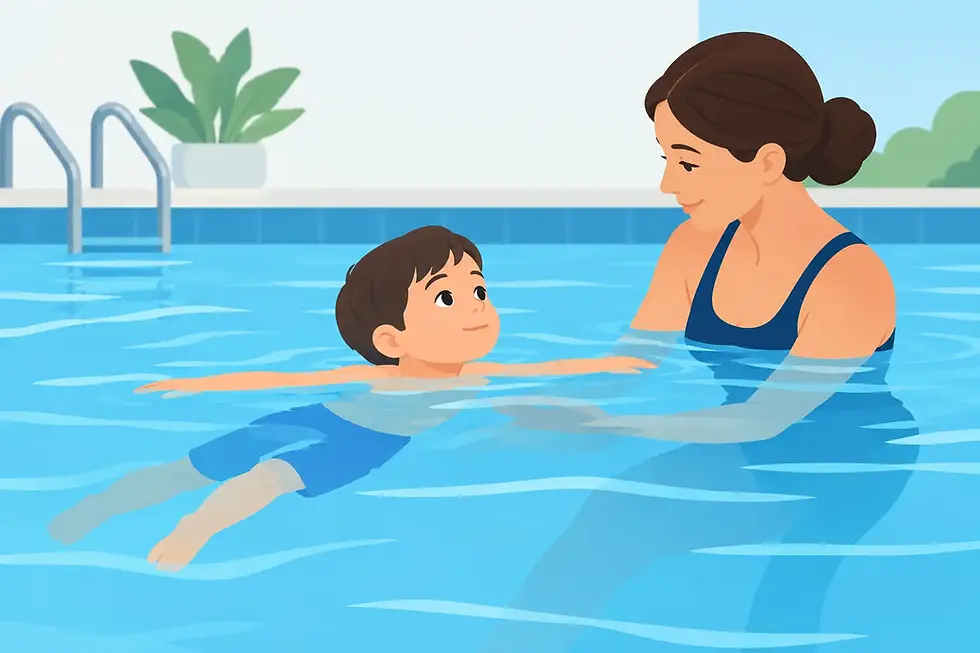
For a young beginner, that may start with getting comfortable putting their face in the water, learning to exhale, and finding balance in a float. For an older child or adult, it may begin with correcting breathing patterns, improving streamline position, or building consistency across a full stroke. The starting point changes. The structure should not.
This is where many families notice the difference between organized instruction and a generic lesson format. A progression plan gives the instructor a roadmap. It also gives parents and swimmers something just as valuable - clarity.
Why progress feels faster when lessons are structured
Swimming progress is rarely linear. A swimmer may master floating quickly but need extra time on rhythmic breathing. Another may be fearless in deep water but struggle with coordination. A good plan does not force every swimmer through the same timeline. It creates a logical sequence while leaving room for individual coaching.
That balance is what makes progress feel steady instead of frustrating. When the next skill is introduced too early, swimmers compensate with poor habits. They may bicycle kick, lift their head too high, or tense up through every movement. Those habits can be hard to undo later.
When instruction is paced properly, swimmers build the foundation first. They learn how the water feels, how their body should move through it, and how to stay calm while trying something new. That usually leads to better retention, stronger technique, and more confidence from lesson to lesson.
Structure supports safety, not just performance
Parents often think about progression in terms of strokes and levels, but safety is a major part of the process. A swimmer who can move their arms and legs is not always a swimmer who can recover when something goes wrong.
A strong progression includes safe entries and exits, breath control under stress, floating to recover, changing direction, and understanding how to respond when they feel tired or unsure. These are not extras. They are core skills.
For children especially, confidence needs to be built on real ability. If a swimmer feels confident but lacks control, that can create risk. If they have ability but no confidence, they may hesitate when they need to act. Structured teaching helps bring both together.
What the stages usually look like
The exact sequence can vary by age and experience, but most effective plans move through a similar pattern. First comes water comfort and trust. Then basic breathing and buoyancy. After that, swimmers work on body alignment, propulsion, and coordinated movement. Only then does stroke development become truly productive.
This order matters more than many people realize. A child who cannot relax into a front float will often struggle with freestyle body position. An adult who holds their breath underwater will have difficulty building smooth side breathing. Stroke correction is far easier when the underlying skill is already there.
As swimmers improve, the focus shifts from simply completing a skill to performing it with control. Kicking becomes more efficient. Arm recovery becomes cleaner. Timing improves. Endurance starts to build. Eventually, swimmers can link skills together over longer distances without losing form.
Not every swimmer moves at the same speed
This is one of the most important realities in swim instruction. A structured system should never feel rigid. It should be organized, measurable, and flexible enough to meet the swimmer in front of the instructor.
Some children need more repetition before they trust the water. Some teens progress quickly once they understand the mechanics. Some adults learn faster because they can process feedback immediately, while others need time to work through fear or previous negative experiences.
That is why low student-to-teacher ratios matter so much. In a crowded class, progression can become more about keeping the group moving than helping each swimmer build the next skill properly. In a more personalized setting, instructors can adjust drills, pacing, and feedback without losing the structure of the overall plan.
How to tell if a swim program is truly progression-based
The easiest sign is whether progress can be explained clearly. If a parent asks what their child is working on, the answer should be specific. Not just "getting stronger" or "practising swimming," but something concrete like controlled submersion, independent back float recovery, or side breathing timing.
Another good sign is that lessons feel connected week to week. The swimmer is not starting over every session. They are revisiting a skill, improving it, and adding the next layer when they are ready.
You should also expect feedback that goes beyond pass or fail. Good instruction identifies what is improving, what still needs support, and what comes next. That kind of communication helps families understand the value of the program and gives swimmers a stronger sense of achievement.
For many families, this is where a program with weekly feedback and skill tracking becomes especially helpful. It removes the guesswork. Instead of wondering whether lessons are working, you can see how development is unfolding over time.
Why personalization makes a structured plan stronger
A plan gives direction. Personalization makes it effective.
In swimming, two swimmers can appear to need the same thing while actually requiring different coaching. A child who lifts their head during freestyle might be doing so because they fear getting water in their face. Another might have poor body alignment. The visible issue looks similar, but the solution is different.
That is why strong instructors do more than deliver a lesson plan. They assess, adjust, and respond in real time. They know when to challenge a swimmer, when to simplify, and when to repeat a skill until it feels automatic.
This approach is especially valuable for families looking for lessons that feel purposeful rather than generic. Across busy communities like Vaughan, where parents are balancing school, work, and activities, convenience matters. But convenience without progress does not solve the real problem. The best lesson experience is one that fits your schedule and shows clear development.
Structured swim progression plan for children, teens, and adults
The principles stay consistent across age groups, but the coaching style should change.
For young children, the emphasis is often on comfort, routine, and trust. Progress depends on creating a positive learning environment where the swimmer feels safe enough to try. Small wins matter here because they shape long-term confidence.
For school-age swimmers and teens, instruction usually becomes more technical. They can handle more detailed feedback, and they often benefit from understanding why a skill matters. This is where measurable progression can really motivate. Once swimmers see the connection between one skill and the next, they tend to engage more fully.
For adults, progress often depends on balancing technical instruction with reassurance. Many adult beginners are capable learners, but anxiety can slow the process. A structured plan helps because it removes uncertainty. Each lesson has a purpose, and each milestone shows that improvement is happening.
What families should expect from a quality program
A quality swim program should feel organized from the first lesson onward. Assessment should be thoughtful, goals should be realistic, and instruction should follow a clear progression instead of a one-size-fits-all routine.
Families should expect certified instructors, consistent teaching standards, and communication that makes progress easy to understand. They should also expect the program to respect the swimmer's pace. Faster is not always better if technique breaks down or confidence drops.
At its best, a structured progression model creates momentum. Swimmers know what they are working on. Parents know what to look for. Instructors know how to guide the next step. That shared clarity is one reason many families choose a program like Aqua Elite when they want more than just pool time - they want real, visible skill development.
A swimmer does not need to improve all at once to be on the right path. They need the right next step, taught with patience, consistency, and purpose. That is what turns lessons into lasting progress.


Comments