


Aquatic Instructor Credentials: What Families Need

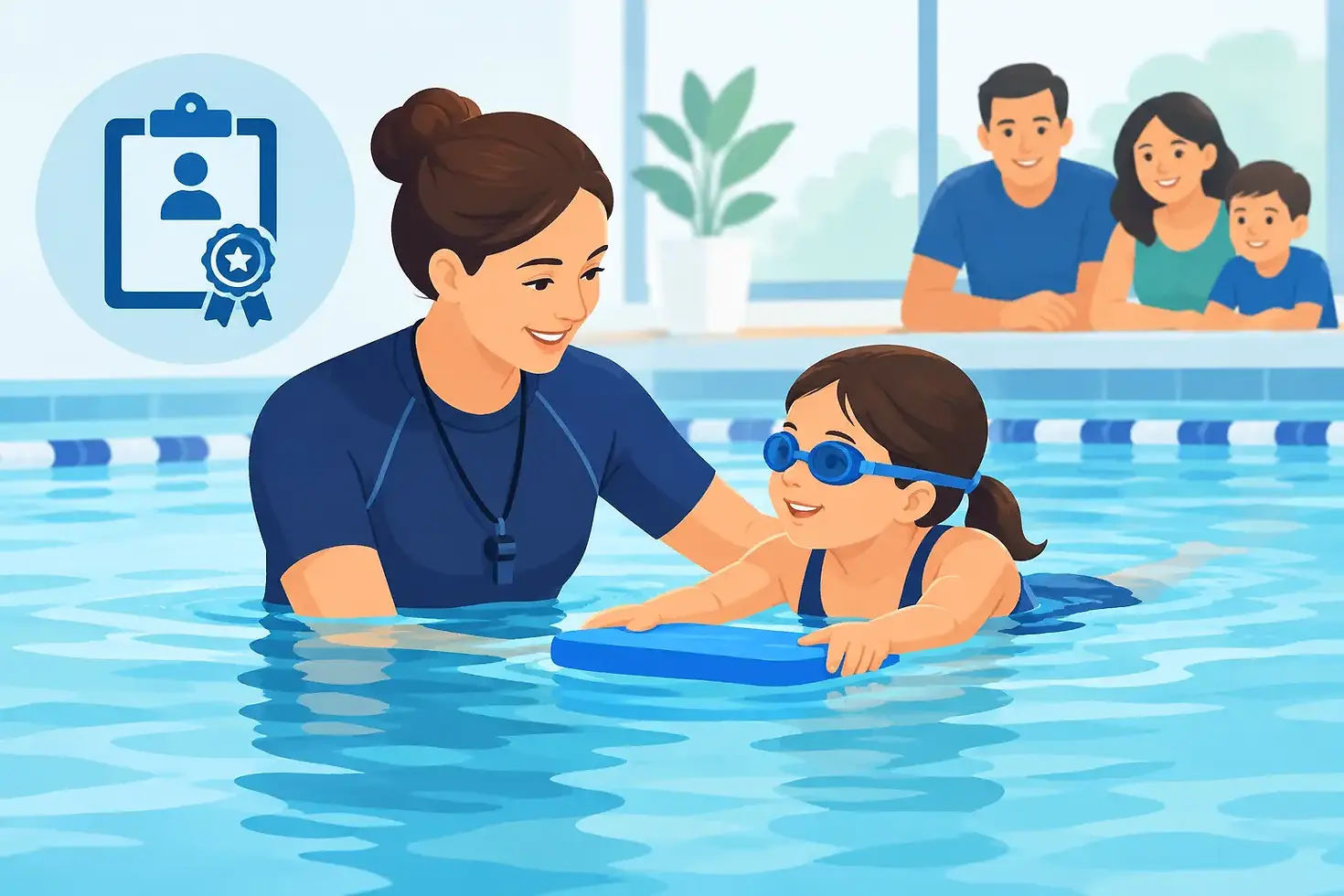
A child may be excited for their first lesson, yet still cling tightly to the pool edge when it is time to enter the water. That moment is where aquatic instructor credentials matter most. Parents are not simply choosing someone who can swim well. They are choosing an educator who can assess confidence, teach safely, respond calmly, and build skills in the right order.
Credentials are a valuable starting point, but they are not the whole story. The strongest swim instruction combines recognized training with current safety skills, practical teaching ability, and a program that tracks progress over time. For children, teens, and adult beginners, that combination creates lessons that feel encouraging while staying purposeful.
What aquatic instructor credentials should show
Aquatic instructor credentials generally indicate that a teacher has completed formal training in water safety, stroke development, lesson planning, and learner supervision. In Canada, many instructors hold nationally recognized swim instructor certifications or have completed equivalent training through established aquatic organizations.
A quality instructor certification should cover more than demonstrating front crawl or back float. Teachers need to understand how to break a skill into manageable steps, spot common errors, adapt activities for different ages, and keep a group safe while providing individual feedback. A swimmer who is nervous around water needs a different approach than a swimmer who is ready to refine breathing and endurance.
Credentials should also be current. Certifications can expire or require recertification, particularly when they involve first aid and CPR. Asking whether an instructor's qualifications are current is a reasonable question, especially when lessons involve young children or swimmers with limited water confidence.
Teaching certification is not the same as lifeguarding
Families sometimes assume every swim instructor is also a lifeguard. That is not always the case. Teaching and lifeguarding are related but distinct roles with different training requirements.
A swim instructor focuses on planning lessons, delivering clear corrections, building skills progressively, and managing learner behaviour. A lifeguard is trained to supervise a larger aquatic environment, identify hazards, prevent incidents, and respond during emergencies. Some professionals hold both qualifications, while others work within a facility where lifeguarding and instruction are assigned separately.
Neither arrangement is automatically better. What matters is that the pool has clear supervision practices, instructors know their responsibilities, and qualified emergency support is available according to the facility's operating procedures.
The safety credentials worth asking about
Alongside teaching certification, first aid and CPR training are meaningful indicators of preparedness. Aquatic environments move quickly. An instructor should know how to recognize an emergency, activate the appropriate response, and provide care within the scope of their training until further help arrives.
For parents evaluating a swim school, it is helpful to ask how often instructors renew first aid and CPR qualifications, how staff practise emergency procedures, and who is supervising the pool deck. A clear answer signals an organized program. A vague answer is worth investigating further.
Screening and safeguarding practices matter as well. Reputable youth programs commonly use hiring procedures that may include background screening, reference checks, training on professional conduct, and policies for interacting with children and families. Requirements can vary by employer and role, but a school should be able to explain how it selects and supports its team.
Credentials matter, but coaching quality changes the lesson
A certificate confirms foundational preparation. It does not, on its own, tell you how effectively an instructor will communicate with your child. The best teachers make technical skills understandable, know when to encourage and when to slow down, and create enough repetition for real learning to take place.
Consider a child learning to put their face in the water. One swimmer may need playful, patient exposure through bubbles and short submersions. Another may be ready to combine breathing with a front glide. An experienced instructor notices that difference and adjusts without making either swimmer feel behind.
This is why class size is closely connected to instructor quality. Even highly qualified instructors have limited attention to divide across a large group. Private, semi-private, and small-group lessons allow more observation, more correction, and more opportunities to practise each skill properly. For children who are anxious, easily distracted, or progressing quickly, that extra attention can make a noticeable difference.
How a structured program supports certified instructors
Strong aquatic instructor credentials are most effective inside a well-run teaching system. Instructors need clear skill standards, age-appropriate lesson goals, and a way to document what each swimmer has achieved. Without that structure, lessons can become a collection of activities rather than a progression toward water safety and confident swimming.
Look for a program that explains what swimmers are working on and what comes next. Early stages may include safe entries, floats, rollovers, underwater comfort, and assisted movement. As swimmers advance, lessons should develop independent propulsion, coordinated breathing, stroke mechanics, deep-water confidence, endurance, and safe decision-making around water.
Regular feedback is especially helpful for families. A brief weekly update can show whether a child is improving their back float, breathing rhythm, or front crawl timing. It also gives parents a clearer picture of when extra practice, more consistency, or a different class format may help.
At Aqua Elite, certified instructors work within a progressive learning model designed to make skill development visible. With low student-to-teacher ratios and ongoing feedback, families can see the purpose behind each stage rather than wondering whether their swimmer is moving forward.
Questions to ask before registering
You do not need to interview every instructor like you are hiring for a corporate role. A few direct questions can give you a useful view of the program's standards:
What recognized swim instructor training do your teachers hold?
Are first aid and CPR credentials current, and how are emergencies handled at the facility?
What is the instructor-to-student ratio for this class?
How do you assess a swimmer's starting level and track progress?
How do instructors support nervous swimmers or children who need more individual attention?
Will I receive feedback about my child's skills and next steps?
Listen for specific answers. A quality provider should be able to explain its teaching approach without relying only on broad claims about safety or experience. It should also be honest about what a particular class can and cannot provide. A beginner who needs close support may benefit more from a private or semi-private format than from a larger group, while a confident swimmer may thrive with peers at a similar level.
Choosing credentials that fit your swimmer's needs
The right choice depends on your goal. For a toddler or young child, prioritize patient instructors, close supervision, and a program built around comfort and foundational safety. For school-age swimmers, look for measurable benchmarks and enough personal feedback to prevent poor habits from becoming routine. For teens and adults, seek an instructor who can teach without pressure and adapt lessons to confidence, fitness, and previous experience.
Convenience matters too, because regular attendance supports progress. A nearby location, dependable schedule, and easy communication can help families stay consistent through the weeks when routines are busy. Still, convenience should support quality, not replace it. The right program makes both possible by pairing qualified instruction with a clear, family-friendly learning experience.
A good swim teacher does more than lead laps or call out corrections from the deck. They help swimmers feel capable in the water, one well-taught skill at a time. When credentials, safety practices, small class ratios, and thoughtful progress tracking work together, families can register with greater confidence and swimmers can focus on the rewarding part: learning to move through the water with strength and ease.


Comments